
















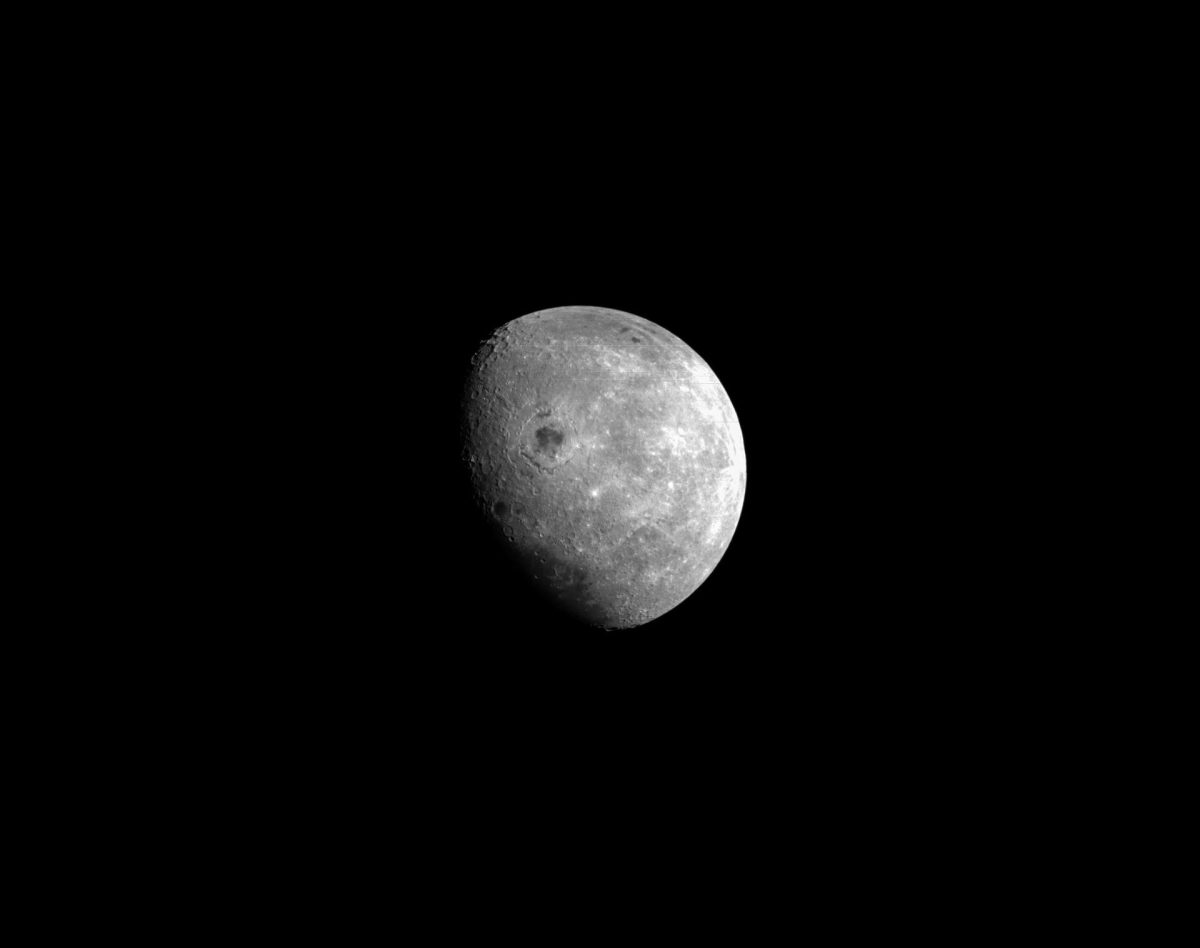



In April 2026, NASA successfully completed its Artemis II mission that saw humans fly by the moon for the first time in more than 50 years. The operation spawned numerous rumors about space, what occurred and the politics around the mission.
When plans for the mission started: In August 2019, during Trump’s first administration, NASA hosted a webpage for its “Moon to Mars” project. This page dated the start of the initiative to 2017 and named the Artemis missions as its first step towards that goal. A timeline on that NASA page set target dates for Artemis I, II and III as 2020, 2022 and 2024, respectively. Artemis I was to be an un-crewed lunar test flight, Artemis II was planned to take astronauts around the moon and Artemis III was set to land astronauts on the moon to explore its southern pole. These same goals for the Artemis missions were also described in a NASA slideshow originally published in May 2019. While it lacked dates, the ninth slide spelled out that Artemis II would have the “First humans to orbit the Moon in the 21st century.”
Although the aforementioned mission missed their timeline dates, the first two missions were successful in meeting the goals set in place. Artemis I took place late in 2022 as an uncrewed lunar flight test and Artemis II occurred in April 2026, seeing the first crewed lunar flyby in more than 50 years.
The four astronauts who flew on the Artemis II mission were selected during the Biden administration. Planning for the mission began, however, under the first Trump administration and, as a whole, has roots dating back to the presidencies of Barack Obama and George W. Bush according to an article posted by SNOPES, a website that conducts extensive fact-checking research on popular topics.
Mission Plan:
The travel plan for the Artemis Mission II was a 10-day crewed lunar flyby. The crew took flight in the SLS rocket, which took lift off from Launch Complex 39B at Kennedy Space Center. With lift off taking place April 1st 2026 and splash down taking place April 11th according to NASA’s Artemis II webpage, a page on NASA’s website dedicated to documenting the efforts that went into the Artemis II launch.
After achieving Earth orbit, the crew conducts checks and performs a manual, in-space maneuver to test the Orion capsule’s proximity operations by approaching the spent SLS upper stage. The service module performed a burn to set the spacecraft on a trajectory to the Moon, performing a “slingshot” maneuver around it to conserve fuel. The crew traveled around the far side of the Moon, reaching a maximum distance of over 250,000 miles from Earth. They performed a seven-hour observation period, observing both the near and far sides of the Moon. The mission concluded with a high-speed re-entry through Earth’s atmosphere, testing the heat shield to its limits before splashing down in the Pacific Ocean. This mission utilized a”free-return” trajectory that used the Earth-Moon gravity field to naturally pull the spacecraft back to Earth after its lunar flyby without further engine use. The mission used a “hybrid” path, featuring an initial high-Earth orbit for system checks followed by a trans-lunar injection, rather than going directly to the Moon like missions before it according to a post on the NASA’s Artemis II webpage. On NASA’s Artemis II webpage, the visual path of the fight plan of Artemis II can be viewed.
The key people behind the mission: The Artemis II was the first crewed flight of the NASA-led Artemis program and the first crewed flight beyond low Earth orbit since Apollo 17 in 1972. The crew broke the Apollo 13 record for the farthest distance humans have traveled from Earth, reaching 406,771 kilometers (252,756 miles). It is unique as the first crewed flight of the SLS rocket and Orion spacecraft. Commander Reid Wiseman, Pilot Victor Glover, and Mission Specialists Christina Koch and Jeremy Hansen were the four selected crew members of this mission. Christina Koch became the first woman, Victor Glover the first person of color, and Jeremy Hansen the first non-U.S. citizen to travel beyond low Earth orbit.
What troubles the mission faced:
The Artemis program faced significant challenges, including severe schedule delays, budget constraints, and technical hurdles. In more ways than one, these challenges had an impact on the timeline of this mission, the resources used and even the travel plan around the moon.
Budget constraints have heavily impacted Artemis II, contributing to significant schedule delays and a total program cost overrun of over $6 billion. While the 2026 crewed mission proceeded, proposed 25–47% cuts to NASA’s overall budget forced a strategic pivot, prioritizing rapid lunar landings over other scientific endeavors and accelerating the search for cheaper alternatives to the expensive SLS rocket, according to an article published by Space.com.
During the post-flight inspections of Artemis I, it was revealed that the heat shield charred differently than expected, requiring in-depth investigations and a change in reentry flight plans. This altered the way the crew would reenter Earth’s orbit and was a key concern when they prepared for splash down. The data collected from Artemis I helped in redesigning the capsule ensuring the safety and reliability in the Orion capsule.
A “wet dress rehearsal” for Artemis II encountered a liquid hydrogen leak and communication issues, highlighting the need for more testing. A wet dress rehearsal also known as a WDR is a comprehensive pre-launch test where the Space Launch System (SLS) rocket is fully loaded with liquid oxygen and hydrogen at the launch pad to simulate a launch countdown, stopping just before ignition. This process, often called a “prelaunch fueling test,” verifies system integrity and validates launch procedures, according to a subsection on NASA’s webpage.
One remarkable technical challenge while in space was the new system toilet used on the spacecraft malfunctioning within the first few hours of the mission’s take off. Mission Specialists Christina Koch was able to repair with the aid of flight controllers who walked her through a series of steps to try and fix it according to a report by Space.com
What doors does this success in mission Open:
The Artemis II mission’s splashdown was a milestone in the new space race unfolding between the U.S and China. But NASA’s next leg of this race, Artemis III, now scheduled for 2027, will see a different, more homegrown competition between SpaceX and Blue Origin as both companies compete to be the next on the moon according to an article published by Scientific American.
Subsequent operations will not match the 2019 plan or timeline. As of this writing, Artemis III is set to be a crewed flight in low-Earth orbit to test one or two landers for astronauts to later use to get to the moon’s surface, while Artemis IV plans to land humans on the moon’s surface to explore its southern pole according to an article posted by SNOPES. The phrase “Born too late for Apollo 11, born just in time for Artemis” has become a popular sentiment among space enthusiasts, comparing the similar national pride that came about from the success of Apollo 11 to the Artemis II mission success.
The success of this mission has not only carved a path for further space exploration, it proved to be a historical moment in which space enthusiasts from all over the world celebrated. From the selection of the crew members, the distance traveled and the multiple “firsts” this mission has, will leave a lasting mark that is sure to go down in history.
